
What is Tableau Next?
An introduction to Tableau Next, the newly released analytics platform from Tableau.


In June 2025, Tableau introduced its next-generation agentic analytics platform called Tableau Next, followed by the release of Tableau+, a premium subscription package that bundles this new platform with Tableau Cloud.
This new product lineup strongly reflects the strategic direction of Salesforce, the company that acquired Tableau. It embodies a clear attempt to seamlessly migrate existing Tableau platform users into the broader Salesforce ecosystem. Let’s explore the specific features and key differentiators of Tableau Next through some core questions.
How is it different from existing Tableau Cloud or Server?
The most significant difference lies in its foundational platform. Tableau Next operates on the Agentforce 360 Platform (Salesforce) rather than a standalone Tableau infrastructure.
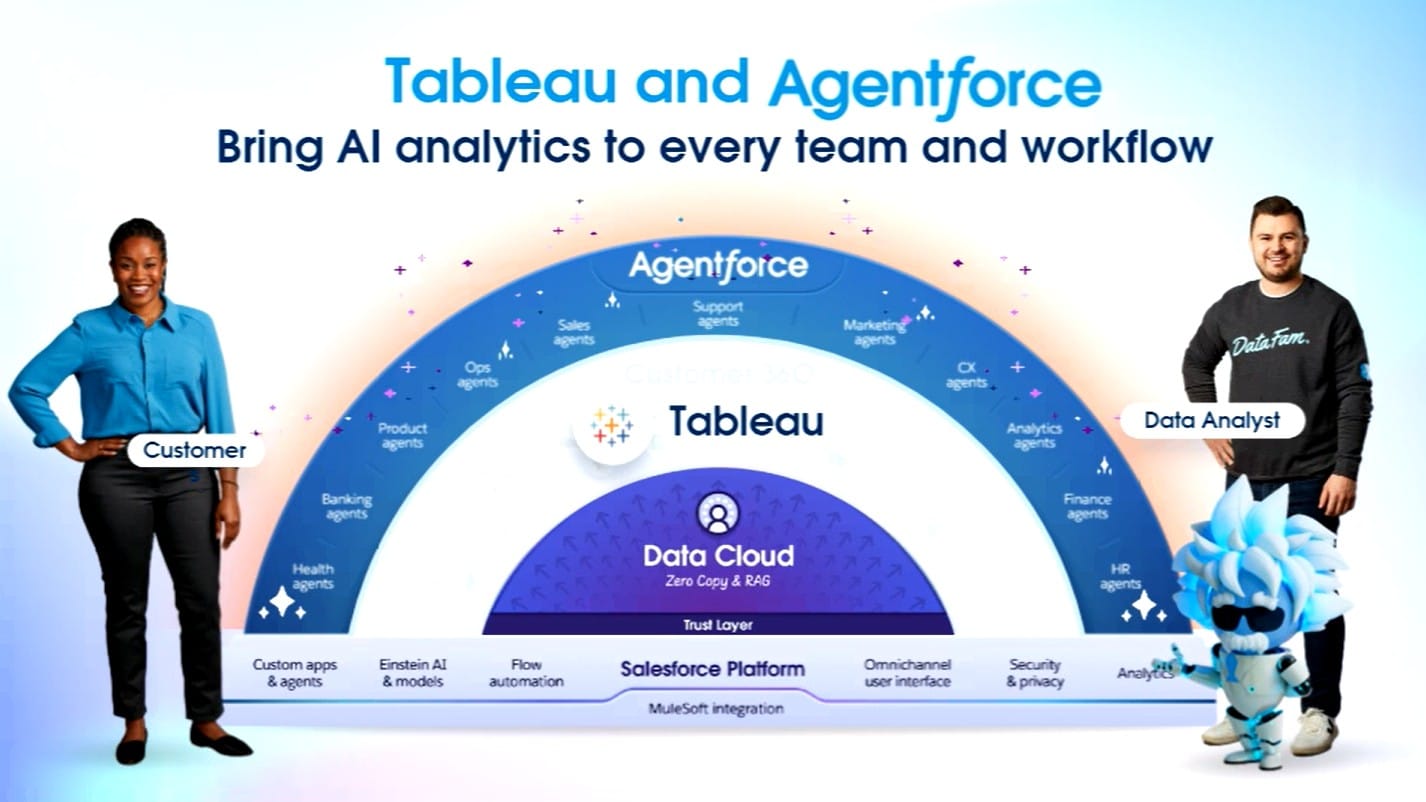
To utilize Tableau Next, users must configure a separate Salesforce Org and set up Data 360 (formerly Data Cloud) as the underlying data platform. While you can deploy Tableau Next independently without using other Salesforce CRM products, the core infrastructure it runs on must be Salesforce. Notably, with the premium Tableau+ package, organizations can scale their analytics with unmetered AI usage, data transforms, and analytical queries without worrying about consumption limits.
How are AI capabilities integrated?
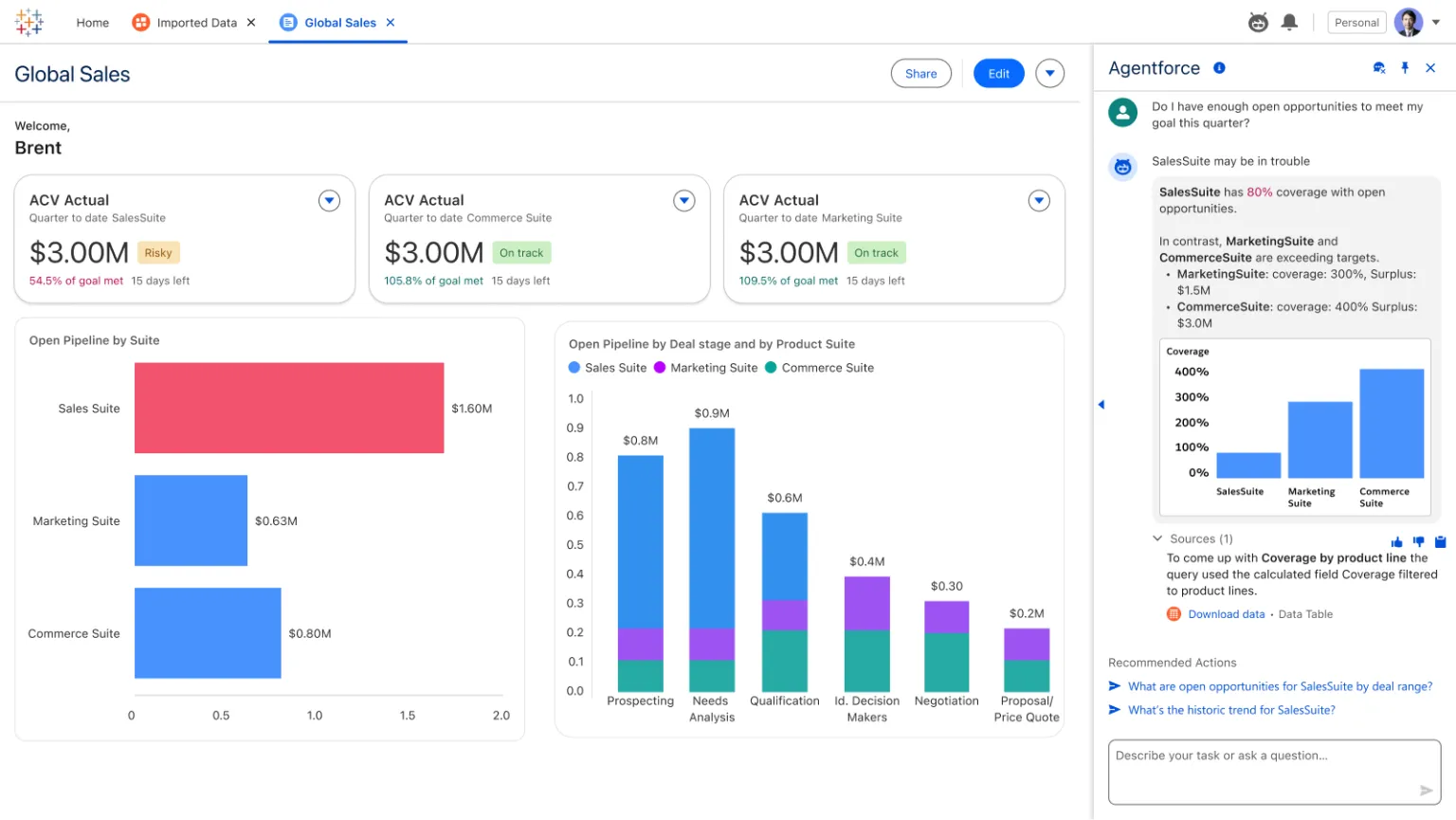
Tableau Next is deeply integrated with Salesforce's powerful AI ecosystem. The AI assistant, formerly known as Einstein Copilot, is now provided under the name Tableau Agent, which is natively woven into Agentforce, Salesforce's enterprise-wide AI system.
Users can converse with the Tableau Agent in natural language across every stage of the analytics journey—from data prep and cataloging to authoring and dashboard summaries. Furthermore, it pushes contextual, AI-powered insights directly into your flow of work (like Slack or your CRM screen), empowering you to take immediate action without having to hunt for data.
How is data modeling enhanced?
Tableau Next introduces a new layer designed to prevent the critical error of users drawing different conclusions from the same data source due to inaccurate or inconsistent data structures.
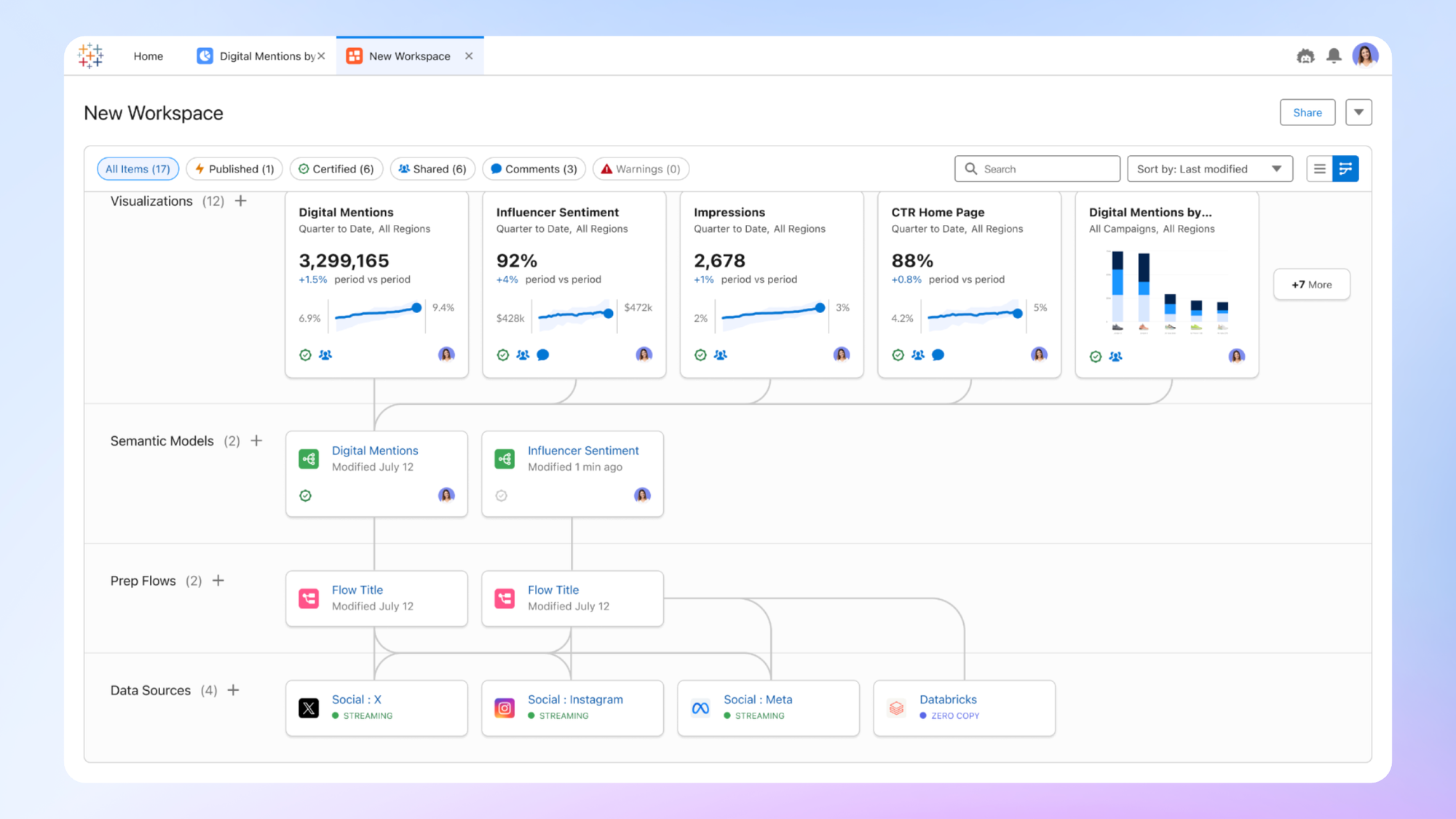
Positioned above the raw data and data prep workflows, this space establishes the definitive baseline for final visualization models. At the heart of this environment is Tableau Semantics. Within Tableau Semantics, users can leverage AI to automate tasks such as:
- Proposing data relationships
- Auto-generating complex calculations
- Automatically building semantic data models
 Yehwan Hwang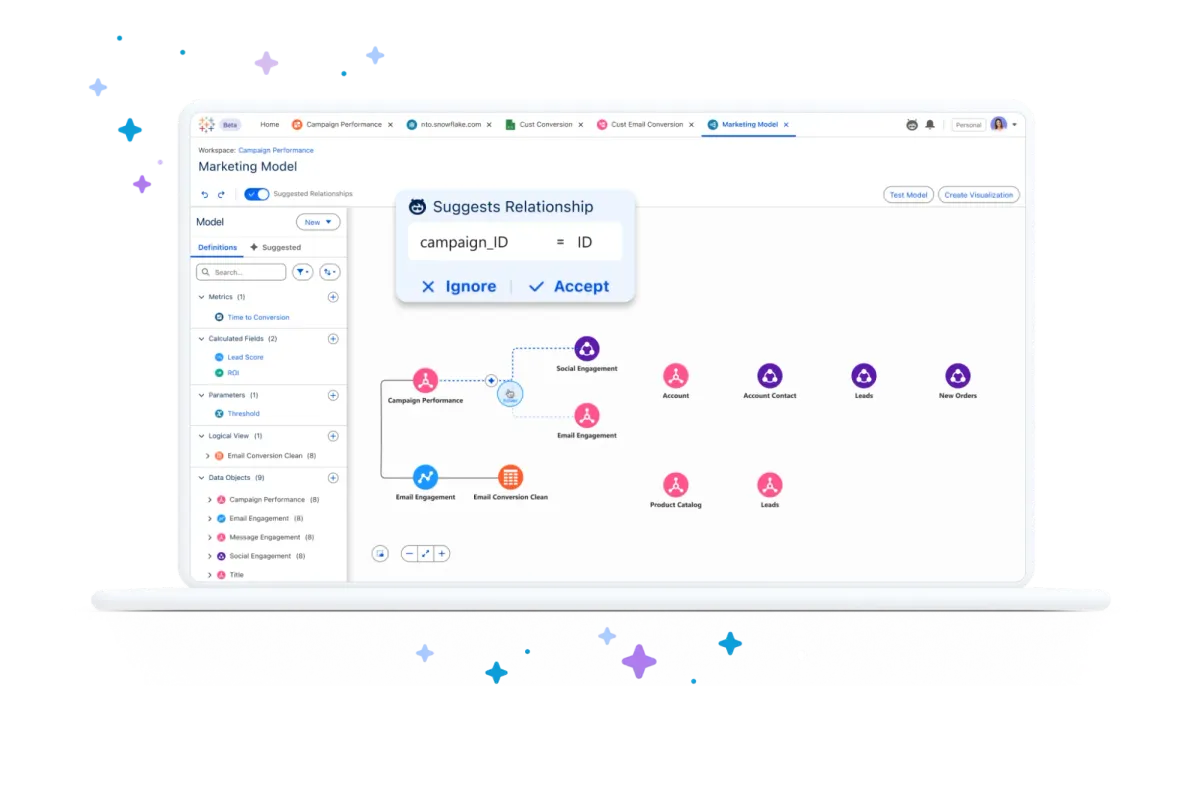
Can we leverage external data assets?
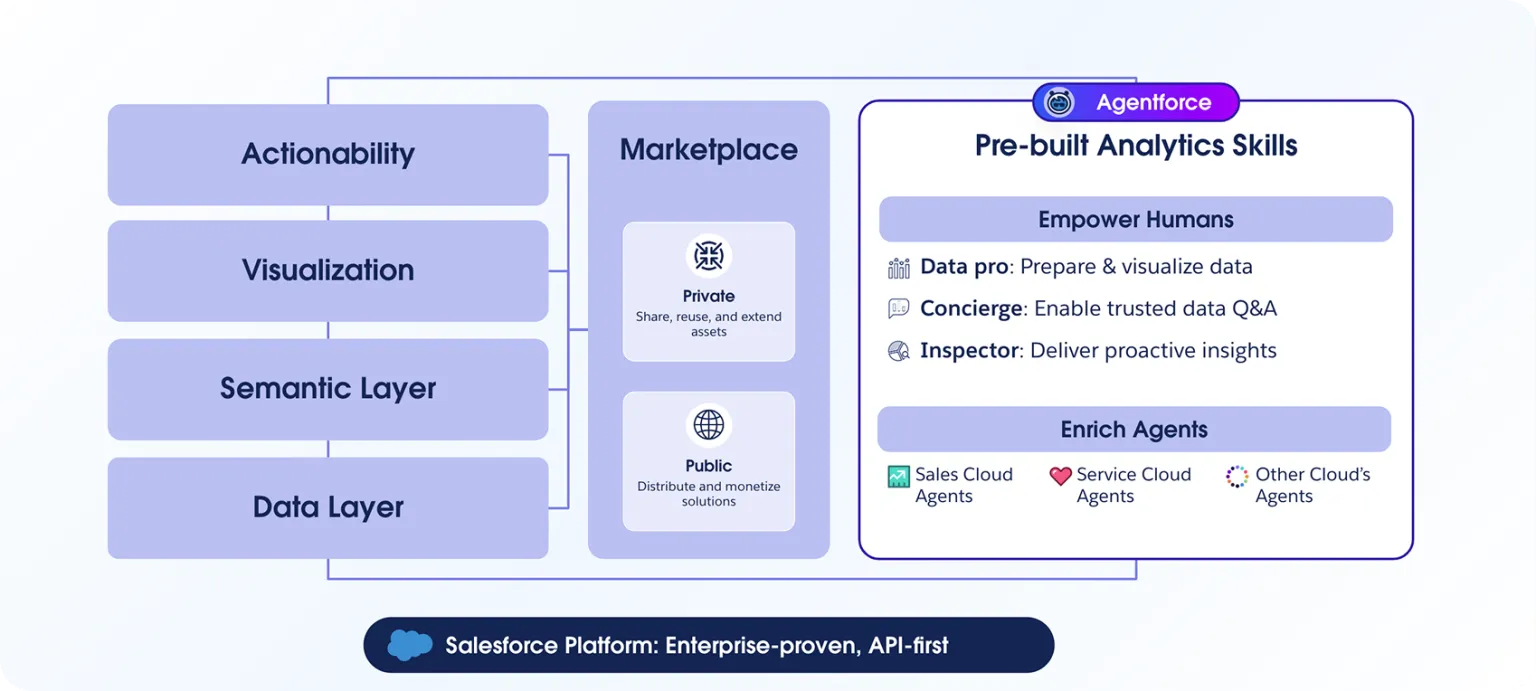
To maximize development efficiency and the reusability of analytic assets, Tableau Next is launching the Tableau Marketplace.
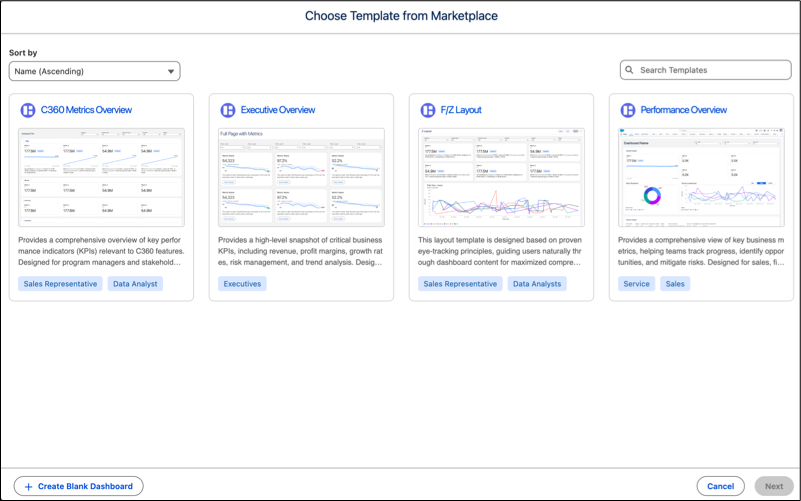
This is a space where organizations and developers can discover, share, and trade assets such as dashboard templates, analytical agents, and data models created by other teams or external experts. Expected to be a governed expansion of Tableau Public, it addresses IP (Intellectual Property) and privacy concerns, allowing creators to seamlessly distribute their exceptional visualization assets across the ecosystem.